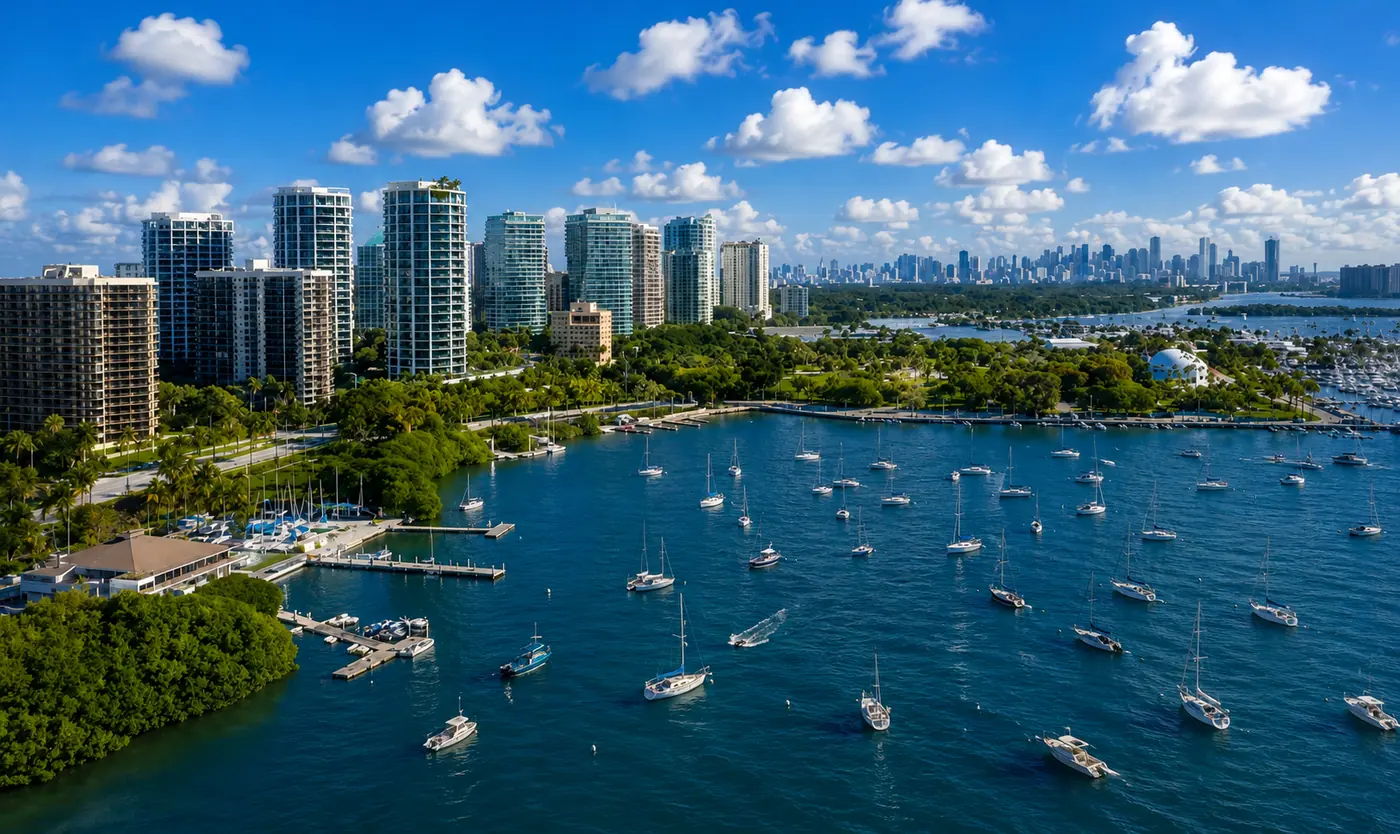
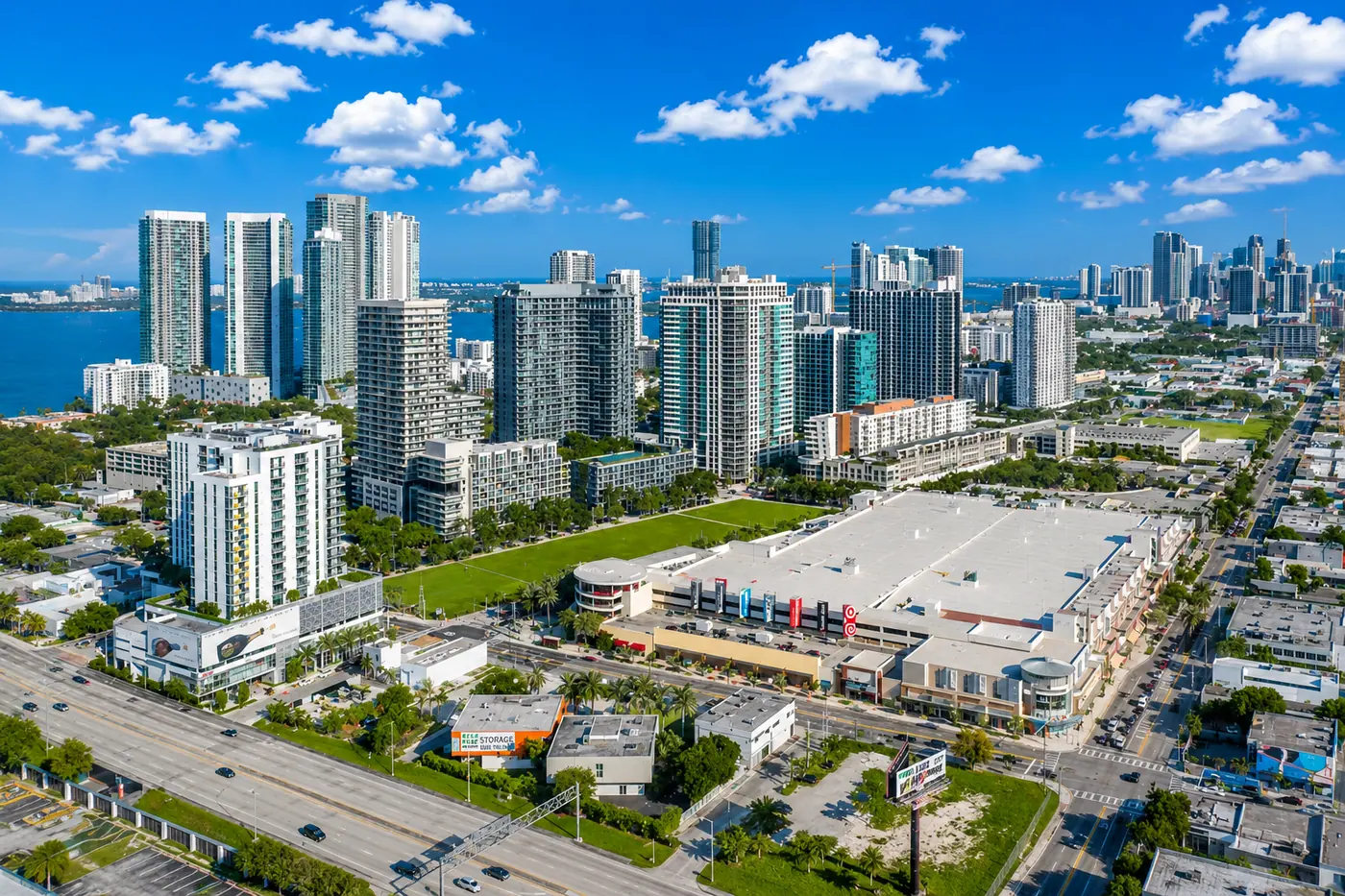
Planned mixed-use district between Wynwood and the Design District, built around a retail core with mid- and high-rise residential above.
| Price range | $380K – $1.1M |
|---|---|
| Price per sq ft | $500 – $720 |
| Median home | $450K – $650K |
| Typical rent | $2,600 – $3,900 |
| HOA / maintenance | $0.80 – $1.30 /sq ft/mo |
| Housing stock | Mid- and high-rise condo over retail |
| Building age | Mostly 2007–2024 |
| Walkability | Very high |
| Water | Inland |
| Transit | Bus and trolley |
| Parking | Structured garage parking |
| Short-term rentals | Restricted in most buildings |
| Pipeline | Moderate |
| Flood | Inland; lower flood exposure |
| To South Beach | 20 min to South Beach |
| To downtown | 10 min |
Walkable grocery and retail at street level, which is rarer in Miami than buyers expect.
School assignment in Miami is handled by Miami-Dade County Public Schools and is based on the property address, not the neighborhood name. Two homes a few streets apart can be zoned to different schools.
The district also runs magnet and choice programs open to students outside their assigned zone, each with its own application window.
Send us the addresses you are considering and we will look up the assigned schools for each. Which school suits your child is your decision.
The figures above describe the area, not a specific property. Association dues, flood zone, short-term rental rules and assessments are set building by building and must be verified on the actual unit before an offer.
Midtown is a planned district rather than an old neighborhood that grew. It sits between Wynwood and the Design District, built around a retail core with mid- and high-rise residential above it, and almost everything here went up between 2007 and 2024.
That planning shows in daily life. Walkability is very high, and there is grocery and retail at street level, which is rarer in Miami than most buyers expect. A lot of the city is built so that you drive to buy milk. Here you do not.
It is inland, so flood exposure is lower than the bayfront neighborhoods, and it is about ten minutes to downtown and twenty to South Beach.
Tell us what you are looking for, and we’ll pull what is available, run the numbers on holding costs, and look up the assigned schools for the addresses on your list.
Start the Conversation
Florida Relocation Desk
Relocation market analysis team
The numbers first. The decision is yours.
Our analysts compare the areas you are considering side by side, so you walk into every conversation already informed.
A RESEARCH DESK, NOT A PORTAL
A neighborhood can feel like a good fit before the numbers have been read. Looking at how a market has behaved over time shows where it stands today, so the financial side of the decision is as clear as the personal one.
Free for buyers.We never ask for a credit card or any payment details.
Let's find your place in Florida.